Ah, juicing. The mysterious practice us foodies and health nuts have been hearing about for the last two years. Hollywood celebrities pioneered juicing with their infamous juice cleanses, which require an all-liquid juice diet for anywhere from three to 21 days at a time. A juice cleanse is said to have immaculate health benefits, including weight loss, joint pain reduction, clear skin, reduced stress, recharged libido and even limb regeneration (only a slight exaggeration). Who would believe this baloney, right? Not me.
Well, not until I read Kris Carr’s Crazy Sexy Diet. New York photographer and actress Kris Carr was diagnosed with a very rare and incurable (yet slow-growing) stage 4 cancer in 2003. With experimental treatment being her only option, she set out to learn about different diet and lifestyle changes in hopes of finding a cure. She compiled all her incredible knowledge into this book, which can only be described as a health and wellness, both physical and spiritual, Bible. Ten years later, with cancer still in tow, Carr is glowing, fabulous and more alive than ever. Her journey has resulted in several books, a documentary film, countless magazine and TV features, and speaking tours across the country. I wouldn’t try summarizing the whole book but one of Carr’s main teachings is, “Make juice not war.”
This book was such an inspiration to me (the self-proclaimed pork addict) to live and eat healthier, and a juice habit is a great way to start.
Benefits of Juicing
Drinking juice allows your body to absorb important nutrients from fruits and vegetables almost instantly. This helps cleanse your blood and major organs, which makes detox the main benefit of juicing (hello, hangover cure!) While eating whole produce provides the same nutrients, plus ever-important fiber, the energy your body uses to break them down prevents that cleansing effect and makes it harder to benefit from those nutrients.
All the speculated benefits of juicing are not yet scientifically proven. The benefits I’ve personally experienced thus far are a decrease in skin inflammation, increased energy and better digestion. Either way, juicing is not a cure-all method. If you’re juicing but eating pizza and cheeseburgers daily, you’re not likely to feel any major benefits.
Consult your doctor before juicing if you’re diabetic. The naturally occurring sugar content may cause a dangerous blood sugar spike.
Masticating vs. Centrifugal Juicers
Masticating (also known as cold press) juicers crush produce and slowly extract juice; they’re quieter and more expensive. Conversely, centrifugal juicers shred produce using a high-speed blade and then separate pulp from juice into two separate containers. Centrifugal machines are faster and cheaper but not necessarily better for it. Juice purists will tell you that the high speed of centrifugal juicers exposes fresh nutrients to a high temperature which oxidizes and kills them. Not enough research exists to support this theory, but I’m inclined to say it’s an exaggeration. Since the juice doesn’t actually come out warm from the juicer, I can’t imagine much damage being done.
In Kris Carr’s own words, “Ultimately, the best juicer is the one you buy.”
I’m a proud owner of a Breville Juice Fountain, a masticating 850-watt juicer that handles hard carrots and beets like a pro. It comes with a large juice pitcher that conveniently skims off the froth from juice, as well as a special brush that makes cleaning the sieve a breeze. Although pretty bulky, it’s a bargain at $150 and I highly recommend it.
Can’t I just buy a carton of juice and call it a day?
No. Even the healthiest of advertised juices with “no added sugars or preservatives” aren’t healthy. The reason those juices are able to keep on a store shelf or in your fridge for weeks and taste exactly the same is that they are pasteurized: boiled to a high temperature, which kills bacteria but inadvertently kills vitamins along with it. All the vitamin C in your “Fresh Florida Orange Juice” is after pasteurization.
Preparing a week’s worth of juice and storing it in the fridge won’t work either. Nutrients in fresh juice die very quickly so it won’t do any good if stored. And since it’s not pasteurized, bacteria will spoil it.
Produce
When juicing, it’s best to use organic if possible. Of course it’s pricey and often elusive, so whatever produce you do use, be sure to wash it extra vigorously under running water. If your produce is not organic and has a skin (like apples, cucumbers, etc.), peel before juicing.
An interesting discovery I’ve made is that hard produce like beets, carrots and even sweet potatoes yield more juice than softer items like mangoes and oranges.
Use 3-to-1 Ratio of Vegetables to Fruit
Using more fruit than vegetables will result in a juice that’s too sweet.
Recipes
Below are a few simple recipes I enjoy, though I usually just improvise depending on what’s in my fridge. Don’t be afraid to use odds and ends like broccoli stalks or leftover greens in your juice - everything goes!
*Each of these yields approximately 10 oz.
Carrot Zinger: 2 large carrots (peeled), 1 apple, 2″ ginger. Stir in a pinch of cayenne pepper for extra anti-inflammatory power!
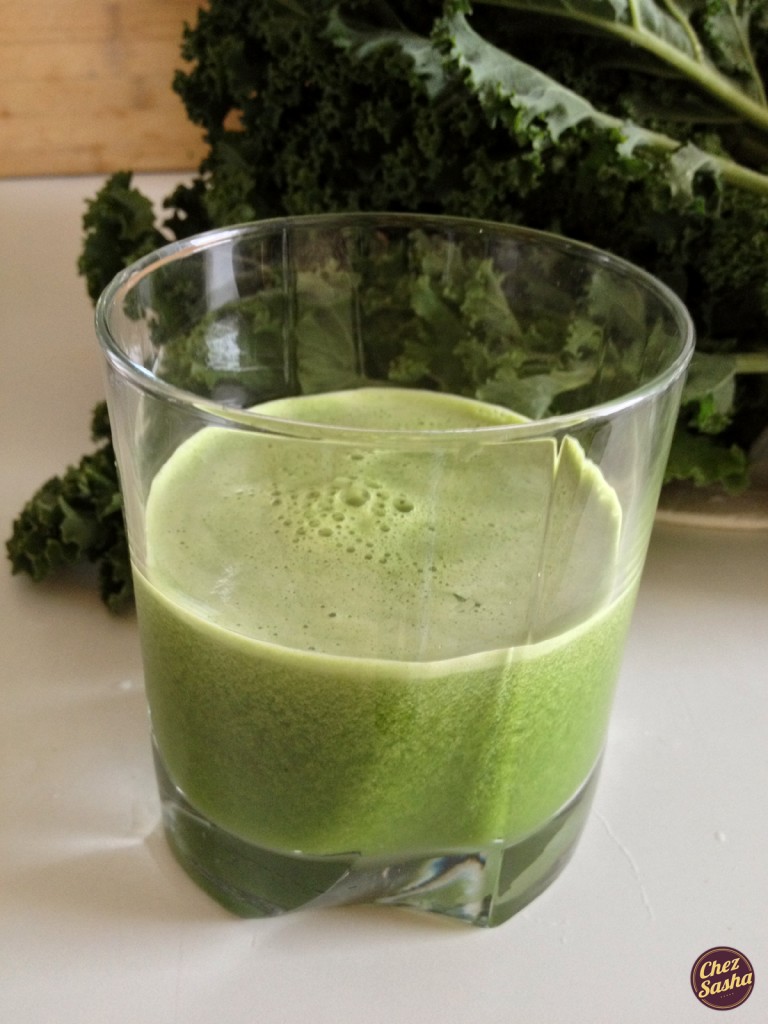
Green Machine: About 5 large kale leaves, 1 sour apple.
Beet Generation: 2 large beets (peeled), 1/2 lemon. (Caution: As a friend once said, beet juice makes you magenta “in other areas of life.” Don’t be afraid. It’s a good thing.)
What are your thoughts on juicing? Have a favorite juice recipe? Share in the comments!







Leave a Reply